REISINICE ADVISORY

Ice advisory · Baltic Sea · Gulf of Finland · Busan, South Korea

Ice advisor for bulk carriers in the Baltic and at Busan

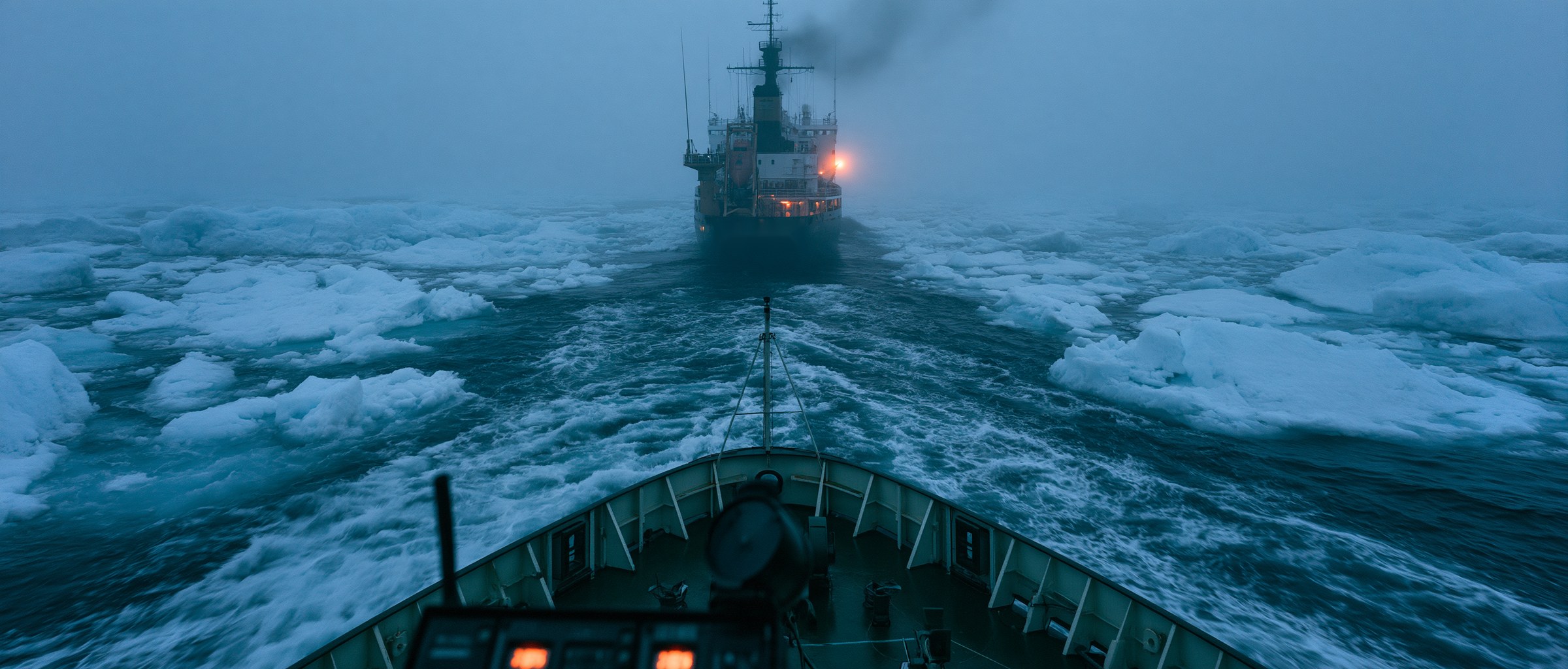
An experienced ice advisor joins your bridge team for the ice passage and advises the Master on route, speed and engine load. The Master remains in command.

On board

What an ice advisor does on your vessel

The advisor works from the moment of appointment until the vessel is clear of ice. The role is strictly advisory: the Master remains in command and responsible for every navigational decision.

Phase 1

Before the ice

  • Studies the routing plan and expected ice conditions along the route.
  • Checks the vessel's ice class against current icebreaker assistance restrictions.
  • Holds a Master–Advisor briefing on boarding to agree roles and communication.
  • Checks readiness for sub-zero operation: sea chests, ballast, deck machinery, searchlights.
  • Trains the Master and bridge team in ice navigation before the ice is reached.

Phase 2

In the ice

  • Advises on route selection through leads and weaker ice, away from ridges and pressure.
  • Recommends safe speed for the ice class, visibility, sea state and fog.
  • Advises on engine load to protect the hull, propeller and rudder.
  • Assesses ice pressure risk and advises on manoeuvres, including astern movements.
  • Stays on the bridge when ice is significant; available around the clock otherwise.

Phase 3

Liaison

  • Requests icebreaker assistance on time, with the details the icebreaker needs.
  • Coordinates convoy work and following in the icebreaker's channel over VHF.
  • Handles contact with VTS, reporting systems and ice services.
  • Monitors ice charts, satellite imagery and forecasts, and updates the plan as conditions change.

Phase 4

After the passage

  • Hands over the completed risk assessments (POLARIS or AIRSS) and ice charts.
  • Provides a voyage report with observations and recommendations for future passages.
  • Disembarks at the agreed port or pilot station.

Safety before schedule

Most merchant vessels have a low ice class. Our advisors take a conservative approach: ice conditions, weather and hazards come before ETA.

Our first concern is the safety of the vessel, her crew and the environment.

Hull condition record

Know the hull condition before and after the ice

Divers inspect the underwater hull at Skagen anchorage before the ice area and again on the way out. You hold a documented record of the hull on both sides of the passage.

How it works

From request to open water

  1. 01

    Send the voyage details

    Vessel, ice class, route, ports and ETA.

  2. 02

    Pre-voyage preparation

    We check ice conditions and assistance restrictions on the route and send guidance to the vessel.

  3. 03

    Embarkation

    By launch at Skagen, Kalundborg, Copenhagen or Gedser Roads, the Kiel Canal or Ventspils, or in any European port.

  4. 04

    Ice passage

    The advisor stays on board through the ice, to the berth and back out if required.

  5. 05

    Disembarkation and report

    Assessments, ice charts and a voyage report are handed over.

Coverage

Where we work

One desk handles the Baltic and our base in Busan.

Baltic SeaNOV – MAY
Gulf of FinlandNOV – MAY
Gulf of BothniaNOV – MAY
Busan, South Korea. Our base portBASE
Arctic and AntarcticON REQUEST
Baltic boarding
Skagen Roads, Kalundborg Roads, Copenhagen Roads, Gedser Roads, Kiel Canal, Ventspils, or any European port.
Skagen anchorage
Advisor boarding and underwater hull inspection.
Busan base
We have a base in the port of Busan, South Korea, and can work there. The advisor boards and leaves the vessel at anchorage.
55°N60°N10°E20°E30°ESkagen RoadsAPPROX. 1 HOURINSPECTION BEFOREINSPECTION AFTERKalundborg RoadsAPPROX. 1.5 HOURSCopenhagen RoadsAPPROX. 30 MINUTESGedser RoadsAPPROX. 1.5 HOURSKiel CanalVentspilsBALTIC APPROACHESICE AREAS · NOV – MAYOR ANY EUROPEAN PORT 35°N125°E130°EBusanOUR BASE · SOUTH KOREAKOREA STRAIT

Frameworks our advisors apply

  • IMO Polar Code
  • POLARIS
  • AIRSS
  • Finnish-Swedish Ice Class Rules
  • IMO A.893(21) voyage planning
  • PWOM

Why Reisin

What owners and charterers get

Hull and propeller protection

Route, speed and engine-load advice aimed at keeping hull, propeller and rudder clear of ice damage.

Clear roles on the bridge

A structured briefing on boarding. The advisor advises; the Master commands. Pilots handle local pilotage; the advisor handles the ice.

A better-trained crew

The bridge watch team is briefed and trained during the voyage, so the experience stays on board.

Signed on as crew

The advisor joins the ship's articles as Ice Navigator / Ice Advisor, not as a passenger, with sea time recorded accordingly.

Documented decisions

POLARIS or AIRSS risk assessments, ice charts and a voyage report support go / no-go decisions and your records for underwriters. A documented hull record on both sides of the ice passage.

Turnkey boarding logistics

We arrange the advisor's transit to your vessel: launch or port boarding, transfers and travel documents, at the Baltic approaches, any European port or Busan.

Smooth VTS and icebreaker liaison

We help your bridge team communicate clearly with icebreakers and VTS control, so the vessel’s passage in convoy runs smoothly.

50+ice pilotages last season, predominantly bulk carriers
24/7availability through the ice season
1 deskfor the Baltic and our base in Busan
Contact

Request an ice advisor or a marine service

Send the voyage details or the scope of work and we will confirm availability, boarding point or port, and rate.

Emailinfo@reisin.ee
Phone · 24/7+372 509 9577
Vessel type
Boarding

We reply to the email address you give. If sending fails, you get a summary to copy and send to info@reisin.ee.